Apr . 01, 2024 17:55 Back to list
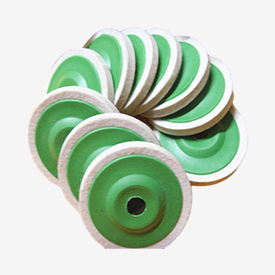
White felted wool Performance Analysis
Introduction
White felted wool is a non-woven fabric produced by matting, condensing and pressing wool fibers together. This process leverages the inherent scalelike structure of wool fibers, which interlock when subjected to moisture, heat, and mechanical action. Its position within the textile industry chain is post-fiber production, representing a value-added process that transforms raw wool into a versatile material used in a broad spectrum of applications, ranging from insulation and filtration to crafts and industrial padding. Core performance characteristics include thermal insulation, sound absorption, cushioning, and inherent fire resistance derived from the protein structure of wool. A key industry pain point lies in maintaining consistent felt density and fiber orientation to guarantee predictable performance, alongside ensuring minimal residual lanolin content which can impact long-term stability and compatibility with certain adhesives and coatings.
Material Science & Manufacturing
The primary raw material, wool, comprises keratin, a complex protein with a distinct helical structure contributing to its elasticity and crimp. Fiber diameter (measured in microns) directly influences felt density and hand feel; finer fibers (e.g., Merino) produce softer, denser felts, while coarser fibers (e.g., Romney) result in more robust, textured materials. Manufacturing begins with wool scouring to remove grease (lanolin), dirt, and other impurities. This is typically done using alkaline detergents and mechanical agitation. Following scouring, the wool is carded—a process that disentangles and aligns the fibers into a web. The carding process significantly impacts the uniformity and strength of the final felt. The carded web is then subjected to felting, employing either wet felting (using hot water, soap, and agitation) or needle felting (using barbed needles to mechanically interlock the fibers). Wet felting relies on the scales on wool fibers causing them to interlock, shrinking the web and creating a dense, matted structure. Needle felting is more controllable and allows for the creation of patterns and varying densities. Key parameters in wet felting include water temperature (40-60°C), pH (slightly acidic), and agitation intensity. In needle felting, needle gauge, density, and penetration depth are critical for achieving desired properties. Post-felting processes can include fulling (further compaction and shrinkage), dyeing, and finishing treatments to enhance performance characteristics like water repellency or fire retardancy.
Performance & Engineering
The performance of white felted wool is significantly influenced by its density and fiber orientation. Density, expressed in kg/m³, directly correlates with thermal and acoustic insulation properties. Higher density felts exhibit superior insulation due to the increased trapping of air within the fiber matrix. Force analysis reveals that felted wool behaves as a viscoelastic material, exhibiting both viscous and elastic properties. Under compression, it deforms and slowly recovers its shape. The compressive strength, measured in kPa, is crucial for applications like cushioning and padding. Environmental resistance is a key consideration. Wool is naturally water-repellent due to the lanolin present (even after scouring, a residual amount remains) and the scaled structure of the fibers. However, prolonged exposure to moisture can lead to degradation and mildew growth. UV radiation can also cause fiber damage, leading to discoloration and reduced strength. Compliance requirements vary based on application. For use in building insulation, fire resistance standards (e.g., EN 13501-1, ASTM E84) are paramount. For medical applications, biocompatibility and sterilization requirements (e.g., ISO 10993) must be met. Functional implementation often involves shaping the felt through cutting, molding, or lamination with other materials. The ability to bond felted wool to other substrates (e.g., fabrics, foams) depends on adhesive compatibility and surface preparation.
Technical Specifications
| Property | Units | Typical Range | Test Method |
|---|---|---|---|
| Density | kg/m³ | 200 - 800 | ISO 9073-1 |
| Thickness | mm | 1 - 25 | ISO 9073-2 |
| Tensile Strength | N/cm | 5 - 30 | ISO 9073-3 |
| Tear Strength | N | 1 - 10 | ISO 9073-4 |
| Thermal Conductivity | W/(m·K) | 0.035 - 0.040 | ISO 8301 |
| Water Absorption | % | 20 - 40 | ISO 9073-5 |
Failure Mode & Maintenance
Failure modes in white felted wool typically stem from mechanical stress, environmental degradation, and chemical attack. Fatigue cracking can occur under repeated compression or flexing, particularly in lower-density felts. Delamination, or separation of felt layers, can arise from inadequate fiber interlocking or the presence of contaminants. Degradation due to UV exposure results in fiber embrittlement and discoloration, reducing tensile strength. Oxidation, accelerated by moisture and heat, can lead to fiber breakdown and loss of insulation properties. Mildew growth, a biological degradation process, occurs in humid environments and compromises the structural integrity of the felt. Maintenance involves regular vacuuming or brushing to remove dust and debris. Avoid prolonged exposure to direct sunlight or excessive moisture. For stain removal, gentle cleaning with a mild detergent and cool water is recommended; harsh chemicals should be avoided as they can damage the wool fibers. In cases of significant damage, localized repair may be possible using needle felting techniques to re-interlock the fibers. However, extensive damage typically necessitates replacement of the affected section.
Industry FAQ
Q: What is the impact of fiber blend composition on the performance of felted wool?
A: The inclusion of synthetic fibers (e.g., polypropylene, polyester) alters the performance characteristics. Synthetic fibers generally enhance abrasion resistance and reduce cost, but can lower thermal insulation and moisture absorption. The proportion of synthetic fibers must be carefully balanced to meet specific application requirements.
Q: How does the wet felting process compare to needle felting in terms of cost and scalability?
A: Wet felting is generally less expensive for large-scale production but offers less control over density and pattern. Needle felting is more expensive but allows for intricate designs and precise density control, making it suitable for smaller-volume, specialized applications.
Q: What considerations are important when selecting an adhesive for bonding felted wool to another substrate?
A: Adhesive compatibility is critical. Water-based adhesives are generally preferred as they minimize fiber damage. The adhesive should exhibit good flexibility and bond strength, and it should not contain solvents that could degrade the wool. Surface preparation (e.g., roughening) can improve adhesion.
Q: How does the residual lanolin content affect the long-term stability of felted wool?
A: While lanolin provides some natural water repellency, high residual content can lead to yellowing over time and attract dirt. It can also interfere with the adhesion of certain coatings and adhesives. Thorough scouring is essential to minimize lanolin content.
Q: What are the primary fire retardancy options for white felted wool and how do they impact its other properties?
A: Fire retardancy can be achieved through topical treatments (e.g., borax, phosphate compounds) or inherent treatments (e.g., using inherently flame-resistant wool breeds). Topical treatments can alter the hand feel and potentially reduce breathability. Inherently flame-resistant wool offers better long-term performance but is typically more expensive.
Conclusion
White felted wool remains a highly versatile material owing to its unique combination of thermal, acoustic, and mechanical properties. The manufacturing process, while seemingly simple, demands precise control of parameters like fiber preparation, felting conditions, and finishing treatments to ensure consistent product performance. Understanding the material’s inherent limitations – particularly its susceptibility to environmental degradation and potential failure modes – is crucial for selecting appropriate applications and implementing effective maintenance strategies.
Future developments will likely focus on sustainable sourcing of wool, innovative felting techniques (e.g., utilizing ultrasonic energy), and the development of bio-based fire retardant treatments. These advancements will further enhance the appeal of white felted wool as a sustainable and high-performance material across a diverse range of industries.


 English
  Afrikaans
  Albanian
  Amharic
  Arabic
  Armenian
  Azerbaijani
  Basque
  Belarusian
  Bengali
  Bosnian
  Bulgarian
  Catalan
  Cebuano
  Corsican
  Croatian
  Czech
Czech  Danish
  Dutch
Dutch  Esperanto
  Estonian
  Finnish
  French
  Frisian
  Galician
  Georgian
  German
  Greek
Greek  Gujarati
  Haitian Creole
  Hausa
Hausa  Hebrew
  Hindi
Hindi  Miao
Miao  Hungarian
  Icelandic
  Igbo
Igbo  Indonesian
  Irish
Irish  Italian
  Japanese
  Javanese
  Kazakh
  Khmer
Khmer  Rwandese
  Korean
  Kurdish
  Kyrgyz
  Lao
Lao  Latin
Latin  Latvian
  Lithuanian
  Luxembourgish
  Macedonian
  Malgashi
  Malay
Malay  Malayalam
  Maltese
  Maori
Maori  Marathi
  Mongolian
  Myanmar
  Nepali
  Norwegian
  Norwegian
  Occitan
  Pashto
  Persian
  Polish
  Portuguese
  Romanian
  Russian
  Samoan
  Scottish Gaelic
  Serbian
  Sesotho
  Shona
Shona  Sindhi
  Sinhala
  Slovak
  Slovenian
  Somali
  Spanish
  Sundanese
  Swahili
  Swedish
  Tajik
Tajik  Tamil
Tamil  Tatar
Tatar  Telugu
  Thai
Thai  Turkish
  Turkmen
  Ukrainian
  Urdu
Urdu  Uighur
  Uzbek
Uzbek  Vietnamese
  Welsh
Welsh  Bantu
Bantu  Yiddish
  Yoruba
  Zulu
Zulu