
Apr . 01, 2024 17:55 Back to list
wholesale felt sheets Performance Analysis
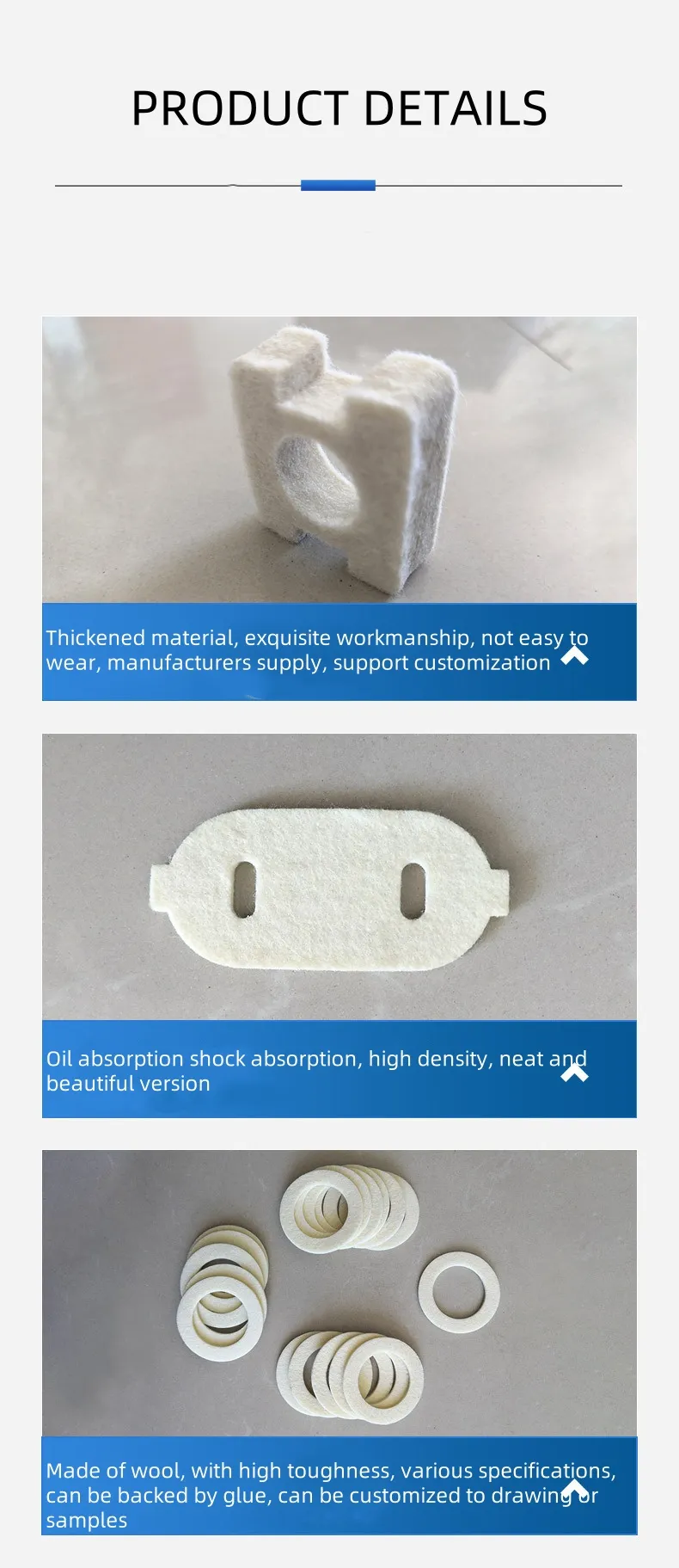
Introduction
Wholesale felt sheets represent a versatile non-woven textile material utilized across a broad spectrum of industrial, commercial, and consumer applications. Composed primarily of compressed natural, synthetic, or blended fibers (typically wool, polyester, acrylic, rayon, or polypropylene), felt distinguishes itself from woven fabrics through its lack of a defined weave. This results in unique properties like dimensional stability, cushioning capabilities, sound absorption, and ease of cutting and forming. Within the manufacturing supply chain, felt sheets occupy a semi-finished materials position, serving as components in larger assemblies or as standalone products. Core performance characteristics – density, thickness, tensile strength, and compression set – directly dictate suitability for specific applications. The industry currently faces challenges relating to sustainable sourcing of raw materials, consistent quality control across diverse manufacturing processes, and meeting increasingly stringent fire safety regulations. This guide provides a comprehensive overview of felt sheet technology, encompassing material science, manufacturing techniques, performance parameters, failure analysis, and relevant industry standards.
Material Science & Manufacturing
The fundamental material science of felt sheets centers on fiber properties and the entanglement mechanisms that create the cohesive structure. Natural wool fibers, possessing a scaly surface, readily interlock through a process called felting, facilitated by moisture, heat, and mechanical action. Synthetic fibers, lacking the natural scale, require different bonding techniques. Polyester fibers, for example, are commonly heat-bonded through processes like needle punching or thermal bonding. Acrylic fibers offer good bulk and softness but have lower abrasion resistance. Rayon provides a cost-effective alternative but is susceptible to dimensional changes with moisture. Polypropylene is valued for its chemical resistance and low cost.
Manufacturing processes vary based on fiber type and desired sheet characteristics. Needle punching involves repeatedly driving barbed needles through the fiber web, mechanically interlocking the fibers. This process is widely used for industrial felts requiring high durability. Thermal bonding utilizes heated rollers or ovens to melt and fuse thermoplastic fibers together. This is common for polyester and acrylic felts. Wet felting (primarily for wool) employs water, soap, and agitation to induce fiber entanglement. Chemical bonding utilizes adhesives to bind fibers, often used for thinner or specialized felts. Key parameters during manufacturing include fiber density (grams per square meter – GSM), web uniformity, temperature control (for thermal bonding), needle density and penetration depth (for needle punching), and moisture content. Maintaining precise control of these parameters is critical to achieving consistent physical properties like thickness, density, tensile strength, and elongation.

Performance & Engineering
The performance of felt sheets is governed by their physical and mechanical properties, specifically relating to their intended application. Force analysis plays a crucial role in applications requiring cushioning or impact absorption. The compression force deflection (CFD) curve illustrates the relationship between applied force and resulting compression, influencing energy absorption capacity. Environmental resistance is paramount; exposure to UV radiation can degrade certain synthetic fibers (particularly polypropylene), leading to embrittlement and discoloration. Moisture absorption affects dimensional stability and can promote microbial growth in natural fibers. Chemical resistance dictates suitability for applications involving exposure to oils, solvents, or acids.
Compliance requirements vary significantly by industry. For automotive applications, flammability standards (e.g., FMVSS 302 in the US) are critical. For building and construction, fire ratings (e.g., ASTM E84) determine permissible use in walls, floors, and ceilings. In filtration applications, pore size distribution and filtration efficiency must meet specific performance criteria. Engineering considerations include the selection of appropriate fiber types and bonding techniques to meet these requirements. For example, a felt sheet used as a gasket requires good compression set resistance to maintain a seal over time, while a felt sheet used as a sound dampener needs high sound transmission loss (STL) characteristics. Finite element analysis (FEA) is often employed to simulate the performance of felt components under various loading conditions.
Technical Specifications
| Property | Wool Felt | Polyester Felt | Acrylic Felt | Polypropylene Felt |
|---|---|---|---|---|
| Density (GSM) | 150-800 | 100-1200 | 120-600 | 80-500 |
| Thickness (mm) | 1-10 | 0.5-25 | 1-8 | 0.5-5 |
| Tensile Strength (N/50mm) | 50-200 | 100-400 | 40-150 | 30-100 |
| Elongation at Break (%) | 20-50 | 30-100 | 40-80 | 50-150 |
| Water Absorption (%) | 30-40 | 0.5-1.0 | 5-10 | 0.1-0.5 |
| Flammability (ASTM D6413) | Self-Extinguishing (treated) | Self-Extinguishing | Self-Extinguishing | Self-Extinguishing |
Failure Mode & Maintenance
Felt sheets, despite their inherent durability, are susceptible to several failure modes. Fatigue cracking can occur under repeated stress, particularly in applications involving cyclical loading. Delamination, or separation of layers, is common in laminated felts and can be exacerbated by moisture ingress. Degradation due to UV exposure leads to embrittlement and loss of strength, particularly in polypropylene felts. Oxidation affects wool felts, causing discoloration and weakening of fibers. Compression set, the permanent deformation after prolonged compression, is a concern for gasket applications. Abrasion leads to fiber loss and thinning of the sheet, common in wiping and polishing applications.
Preventative maintenance depends on the application. Regular inspection for signs of wear, cracking, or delamination is crucial. Cleaning procedures should be tailored to the fiber type; wool felts require gentle washing with mild detergents, while synthetic felts can often be cleaned with water and a mild soap. Avoid harsh chemicals or abrasive cleaners. UV protection (e.g., coatings or shaded environments) can extend the lifespan of polypropylene felts. For critical applications, periodic replacement of felt sheets is recommended based on usage and environmental conditions. Proper storage in a dry, well-ventilated area is essential to prevent mold growth and fiber degradation.
Industry FAQ
Q: What is the primary difference between wool felt and polyester felt in terms of cost and performance for industrial gasketing?
A: Polyester felt is generally more cost-effective than wool felt. However, wool felt offers superior compression set resistance, meaning it recovers its shape better after being compressed for extended periods. This leads to a better, more consistent seal in gasketing applications where maintaining a tight seal over time is critical. Polyester felt can be suitable for less demanding applications where cost is a primary concern.
Q: How does needle punching affect the structural integrity of a felt sheet compared to thermal bonding?
A: Needle punching creates a mechanically interlocked structure, resulting in a higher tensile strength and abrasion resistance. Thermal bonding relies on fiber fusion, which can sometimes lead to lower tensile strength, but offers a smoother surface finish and potentially better dimensional stability, especially at elevated temperatures. The choice depends on the application’s specific requirements.
Q: What are the key considerations when selecting felt sheets for sound absorption in automotive interiors?
A: Density and thickness are the primary factors. Higher density and thickness generally translate to better sound absorption, particularly at lower frequencies. Fiber type also plays a role; polyester and acrylic felts tend to perform well in sound absorption. Flame retardancy is also a critical consideration due to automotive safety regulations.
Q: What is the impact of moisture on the long-term performance of rayon felt sheets?
A: Rayon is highly absorbent and susceptible to dimensional changes (shrinkage) when exposed to moisture. Repeated wetting and drying cycles can weaken the fibers and reduce the overall integrity of the sheet. Rayon felt is generally not recommended for applications where prolonged exposure to moisture is expected.
Q: Are there any sustainable alternatives to traditional petroleum-based polyester felt?
A: Yes, recycled polyester felt is increasingly available, offering a more sustainable option. Furthermore, bio-based polyester felts, derived from renewable resources, are emerging as a viable alternative. However, it’s crucial to verify the sourcing and certification of these materials to ensure genuine sustainability claims.
Conclusion
Wholesale felt sheets represent a diverse class of materials offering a unique combination of properties applicable to a vast range of industrial and commercial applications. Understanding the nuances of fiber selection, manufacturing processes, and performance characteristics is essential for engineers and procurement managers to optimize material choices. The ongoing drive for sustainability is prompting innovation in both raw material sourcing and manufacturing techniques, leading to the development of more environmentally friendly felt products.
Future trends in felt sheet technology will likely focus on enhancing performance through fiber modification (e.g., adding conductive fibers for ESD applications), developing more sophisticated bonding techniques to improve durability, and expanding the use of recycled and bio-based materials. Continued research and development will be crucial to addressing the evolving needs of industries demanding high-performance, cost-effective, and sustainable felt solutions.


 English
  Afrikaans
  Albanian
  Amharic
  Arabic
  Armenian
  Azerbaijani
  Basque
  Belarusian
  Bengali
  Bosnian
  Bulgarian
  Catalan
  Cebuano
  Corsican
  Croatian
  Czech
Czech  Danish
  Dutch
Dutch  Esperanto
  Estonian
  Finnish
  French
  Frisian
  Galician
  Georgian
  German
  Greek
Greek  Gujarati
  Haitian Creole
  Hausa
Hausa  Hebrew
  Hindi
Hindi  Miao
Miao  Hungarian
  Icelandic
  Igbo
Igbo  Indonesian
  Irish
Irish  Italian
  Japanese
  Javanese
  Kazakh
  Khmer
Khmer  Rwandese
  Korean
  Kurdish
  Kyrgyz
  Lao
Lao  Latin
Latin  Latvian
  Lithuanian
  Luxembourgish
  Macedonian
  Malgashi
  Malay
Malay  Malayalam
  Maltese
  Maori
Maori  Marathi
  Mongolian
  Myanmar
  Nepali
  Norwegian
  Norwegian
  Occitan
  Pashto
  Persian
  Polish
  Portuguese
  Romanian
  Russian
  Samoan
  Scottish Gaelic
  Serbian
  Sesotho
  Shona
Shona  Sindhi
  Sinhala
  Slovak
  Slovenian
  Somali
  Spanish
  Sundanese
  Swahili
  Swedish
  Tajik
Tajik  Tamil
Tamil  Tatar
Tatar  Telugu
  Thai
Thai  Turkish
  Turkmen
  Ukrainian
  Urdu
Urdu  Uighur
  Uzbek
Uzbek  Vietnamese
  Welsh
Welsh  Bantu
Bantu  Yiddish
  Yoruba
  Zulu
Zulu