
Apr . 01, 2024 17:55 Back to list
Wool Felt Manufacturers Technical Performance Analysis
Introduction
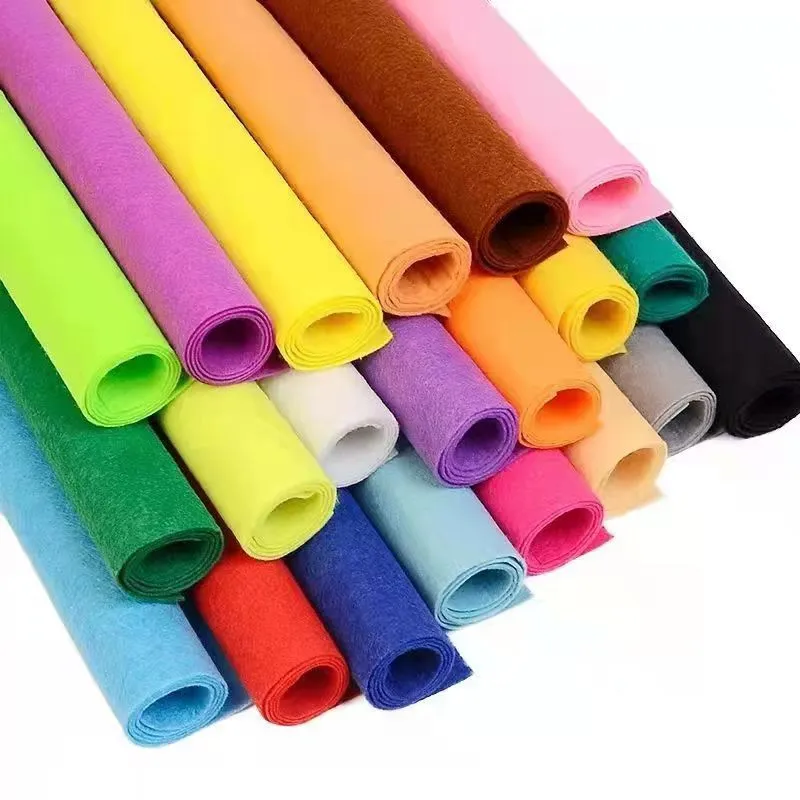
Wool felt is a non-woven fabric produced from natural wool fibers through a process of matting, condensing, and pressing. It differs fundamentally from woven fabrics, lacking a traditional yarn structure. Within the broader textile industry, wool felt occupies a specialized niche, serving diverse applications ranging from industrial filtration and insulation to acoustic dampening, cushioning, and craft materials. Its core performance characteristics—compressibility, density, resilience, and inherent thermal & acoustic properties—define its utility. A key differentiating factor is the absence of a grain, providing uniform properties in all directions. The industry faces challenges in maintaining consistent fiber quality, controlling shrinkage during processing, and addressing the rising demand for sustainable, environmentally responsible manufacturing practices. This guide provides an in-depth technical analysis of wool felt, from material science and production to performance, failure modes, and industry standards.
Material Science & Manufacturing
The primary raw material for wool felt is sheep fleece, comprising keratin protein fibers. Wool fiber characteristics – fiber diameter (measured in microns), length, crimp, and strength – significantly impact felt properties. Finer fibers (e.g., Merino wool, 11-24 microns) yield softer, denser felts, while coarser fibers (e.g., Romney, 30-40 microns) provide greater resilience and bulk. Manufacturing begins with scouring the wool to remove lanolin, dirt, and other impurities. Carding then aligns the fibers into a web. This web undergoes a crucial felting process involving moisture, mechanical action (needling, hammering, or vibration), and heat. The scale structure of wool fibers, combined with these forces, causes interlocking, creating a dense, cohesive structure. Needle felting uses barbed needles to mechanically entangle fibers, controlling density and pattern. Wet felting relies on hot water, soap, and agitation. Key process parameters include water temperature (critical for fiber scale activation), pressure applied during pressing (influencing density and shrinkage), and the duration of mechanical action (affecting fiber interlocking). Chemical treatments, such as dyeing or anti-moth treatments, are applied before or after felting, requiring careful consideration of chemical compatibility with wool’s protein structure. Controlling variations in fiber composition, processing conditions, and chemical treatments is vital for achieving consistent product quality.
Performance & Engineering
Wool felt's performance is dictated by its density, thickness, and fiber characteristics. Force analysis reveals its ability to distribute loads effectively, making it ideal for cushioning and shock absorption applications. Compressive strength and resilience are key metrics, impacted by fiber crimp and density. Environmental resistance is a significant concern. Wool is susceptible to degradation from UV radiation, leading to fiber weakening and discoloration. Moisture absorption, while beneficial for some applications (e.g., moisture buffering), can lead to shrinkage and dimensional instability. The thermal insulation properties are excellent, stemming from the air trapped within the fiber structure; the R-value (thermal resistance) increases with density. Acoustic performance relies on the felt’s ability to absorb sound energy, converting it to heat through friction within the fiber matrix. Compliance requirements vary by application. For filtration, standards address particle retention efficiency and pressure drop. For building insulation, fire resistance and thermal conductivity are crucial. Wool felt’s inherent fire resistance (due to its high nitrogen and moisture content) is advantageous, but fire retardant treatments may be necessary to meet specific standards. Understanding the interplay between these properties and engineering design considerations is critical for optimal performance in targeted applications.
Technical Specifications
| Parameter | Units | Typical Range (Industrial Grade) | Typical Range (Craft Grade) |
|---|---|---|---|
| Density | g/cm³ | 0.2 – 0.8 | 0.1 – 0.5 |
| Thickness | mm | 1 – 10 | 0.5 – 5 |
| Tensile Strength | N/cm | 5 – 20 | 3 – 10 |
| Elongation at Break | % | 20 – 50 | 15 – 40 |
| Water Absorption | % (24hr immersion) | 30 – 50 | 35 – 55 |
| Thermal Conductivity | W/m·K | 0.035 – 0.045 | 0.040 – 0.050 |
Failure Mode & Maintenance
Wool felt is susceptible to several failure modes. Shrinkage, particularly during initial wetting, is common and can be mitigated through careful processing and pre-shrinking treatments. Fatigue cracking can occur under repeated compression, especially with lower density felts. Fiber breakage and wear result from abrasion and mechanical stress. Biodegradation, caused by microorganisms, is a concern in humid environments. Moth infestation is a well-known issue, requiring preventative treatments. Oxidation, triggered by UV exposure and atmospheric pollutants, leads to fiber degradation and discoloration. Delamination can occur in laminated felt structures if adhesive bonding fails. Maintenance involves regular cleaning to remove dirt and debris. Vacuuming is preferred over wet cleaning, as excessive moisture can exacerbate shrinkage. Mothproofing treatments should be reapplied periodically. Storage in a cool, dry, and dark environment minimizes degradation. For heavily soiled felt, gentle hand washing with a mild detergent is recommended, followed by careful drying flat to avoid distortion. Regular inspection for signs of wear or damage allows for timely repair or replacement, extending the product's lifespan.
Industry FAQ
Q: What is the impact of fiber diameter on the performance of wool felt for filtration applications?
A: Finer fiber diameters (lower micron count) generally lead to more effective filtration, as they create smaller pore sizes and increase the surface area for particle capture. However, finer fibers can also increase pressure drop across the filter, potentially reducing flow rate. Selecting the appropriate fiber diameter requires balancing filtration efficiency with acceptable pressure drop based on the specific application requirements.
Q: How does the wet felting process compare to needle felting in terms of the resulting felt properties?
A: Wet felting typically produces a more uniform and dense felt structure compared to needle felting, but it's limited in its ability to create complex patterns or designs. Needle felting allows for greater control over density distribution and pattern creation but may result in a slightly less homogenous structure with visible needle marks. The choice depends on the desired aesthetic and functional properties.
Q: What methods are used to assess the fire resistance of wool felt?
A: Fire resistance is typically assessed using standardized tests such as ASTM D6413 (Flame Propagation of Small Specimens) and EN 13501-1 (Classification of building products and building elements according to reaction to fire). These tests measure parameters like flame spread, smoke generation, and heat release. Wool felt naturally exhibits good fire resistance due to its inherent properties, but treatments can enhance performance to meet specific fire safety regulations.
Q: How does humidity affect the dimensional stability of wool felt?
A: Wool is hygroscopic, meaning it readily absorbs moisture from the air. This absorption causes the fibers to swell, leading to shrinkage and dimensional changes. The extent of shrinkage depends on the felt’s density, fiber composition, and processing conditions. Controlling humidity levels during storage and use is crucial for maintaining dimensional stability.
Q: Are there sustainable alternatives to traditional wool felt manufacturing practices?
A: Yes. Reducing water consumption during scouring and felting, utilizing eco-friendly dyes and finishes, and sourcing wool from responsibly managed farms are key sustainable practices. Exploring recycled wool fibers and blending wool with other sustainable materials (e.g., plant-based fibers) are also gaining traction. Life Cycle Assessments (LCAs) are increasingly used to evaluate the environmental impact of different manufacturing processes.
Conclusion
Wool felt remains a highly versatile and valuable material across a broad spectrum of industrial and consumer applications. Its unique combination of properties – compressibility, insulation, acoustic dampening, and inherent fire resistance – differentiates it from synthetic alternatives. Understanding the intricate relationship between raw material characteristics, manufacturing processes, and performance parameters is crucial for optimizing product design and ensuring application suitability. Addressing the challenges related to environmental degradation, dimensional stability, and sustainable manufacturing is essential for the continued growth and relevance of the wool felt industry.
Future developments are likely to focus on enhancing felt properties through innovative fiber treatments, exploring novel felting techniques, and integrating smart materials for advanced functionalities. The increasing demand for sustainable and eco-friendly materials will drive further research into responsible wool sourcing, environmentally benign processing methods, and the development of biodegradable or recyclable felt products. Continuous improvement in quality control, coupled with a commitment to meeting stringent industry standards, will solidify wool felt’s position as a preferred material in demanding applications.


 English
  Afrikaans
  Albanian
  Amharic
  Arabic
  Armenian
  Azerbaijani
  Basque
  Belarusian
  Bengali
  Bosnian
  Bulgarian
  Catalan
  Cebuano
  Corsican
  Croatian
  Czech
Czech  Danish
  Dutch
Dutch  Esperanto
  Estonian
  Finnish
  French
  Frisian
  Galician
  Georgian
  German
  Greek
Greek  Gujarati
  Haitian Creole
  Hausa
Hausa  Hebrew
  Hindi
Hindi  Miao
Miao  Hungarian
  Icelandic
  Igbo
Igbo  Indonesian
  Irish
Irish  Italian
  Japanese
  Javanese
  Kazakh
  Khmer
Khmer  Rwandese
  Korean
  Kurdish
  Kyrgyz
  Lao
Lao  Latin
Latin  Latvian
  Lithuanian
  Luxembourgish
  Macedonian
  Malgashi
  Malay
Malay  Malayalam
  Maltese
  Maori
Maori  Marathi
  Mongolian
  Myanmar
  Nepali
  Norwegian
  Norwegian
  Occitan
  Pashto
  Persian
  Polish
  Portuguese
  Romanian
  Russian
  Samoan
  Scottish Gaelic
  Serbian
  Sesotho
  Shona
Shona  Sindhi
  Sinhala
  Slovak
  Slovenian
  Somali
  Spanish
  Sundanese
  Swahili
  Swedish
  Tajik
Tajik  Tamil
Tamil  Tatar
Tatar  Telugu
  Thai
Thai  Turkish
  Turkmen
  Ukrainian
  Urdu
Urdu  Uighur
  Uzbek
Uzbek  Vietnamese
  Welsh
Welsh  Bantu
Bantu  Yiddish
  Yoruba
  Zulu
Zulu